What is Physical Delivery in Commodity Trading?
Introduction
Think of it this way: you're a farmer in Punjab cultivating wheat under the open sky in India or a jeweller in Mumbai carving gold ornaments. And you're hedging price risk by trading commodities. But now you hear you have a "physical delivery" obligation. What is physical delivery, and how does physical delivery affect you in India's commodity markets? Let's take a closer look at the physical delivery of commodities, a key concept in trading that connects futures markets with the goods you consume.
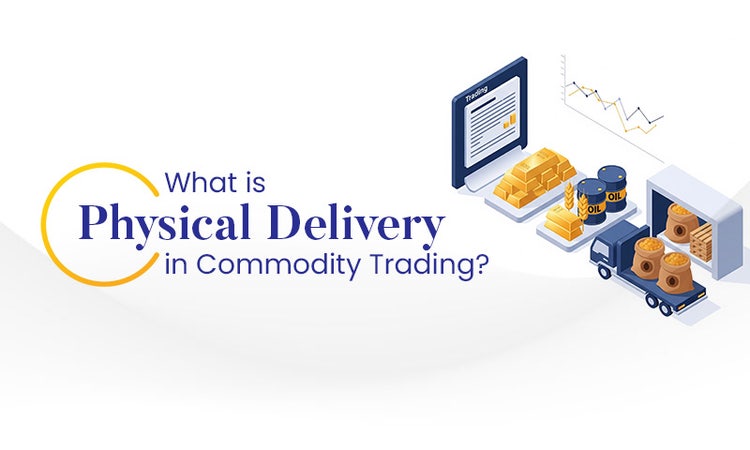
Physical delivery in the commodity trading process means you, as a buyer, will receive the commodity (for example, wheat, gold, crude oil, etc.) when the futures contract expires. When you physically deliver the commodity, you receive the physical goods instead of cash settlement, where the price difference is settled in rupees. Physical delivery processes are essential in India, where many commodities are agricultural, metals, and energy, which are all important to our economy.
Open Demat Account and Start Trading!
Understanding Futures Contracts and Physical Delivery
A futures contract with physical delivery is a commitment to purchase or sell a given quantity of a commodity at a specified price on a future date. These contracts can be traded on commodities like the Multi-Commodity Exchange of India (MCX) or the National Commodity and Derivatives Exchange (NCDEX). For example, let's say you are a trader in Gujarat, and you buy a soybean futures contract on NCDEX to purchase 100 quintals (or 10 tonnes) of soybeans at ₹4,000 per quintal. If you hold the contract until it expires, physical delivery requires the seller to deliver those soybeans to you at an exchange-approved warehouse, say in Indore.
The contract spells out everything: the commodity's quality, quantity, delivery location, and date. For example, a gold futures contract on MCX might involve 1 kg of 99.5% pure gold delivered to a vault in Ahmedabad. This assures you that you get what you bargained for, with no surprises.
Who uses physical delivery?
Physical delivery isn't for everyone. In India, we find two groups that engage with it:
1. Hedgers: If you are a farmer in Haryana or the owner of a refinery in Jamnagar, you have a future contract to lock in a price. The farmer, for example, may sell wheat futures to lock in a price, delivering grain into a silo at expiration. A refinery may buy crude oil futures, taking delivery to give it fuel for production. Futures provide certainty about your costs in an uncertain price environment, and the Indian commodity/food markets are notorious for price volatility.
2. Speculators: If you are a trader in Delhi, you might take a speculative position on price movement, but you do not plan to take delivery. Most speculators will likely close these positions before expiration and avoid physical delivery altogether. Only approximately 1-2% of futures contracts on Indian exchanges like the MCX will be delivered, as most traders want to settle their trades for cash.
How Does Physical Delivery Work in India?
After a futures contract with physical delivery of the underlying expires, the exchange will manage the physical delivery. The buyer will receive the commodity at a specified delivery point, like Kolhapur for turmeric in a warehouse, or a port in Mundra for a crude oil contract. The seller is responsible for delivering a commodity that meets quality standards verified by inspectors appointed by an approved exchange. The buyer must organise the necessary transport to the buyer's warehouse, storage, and insurance; all of which can be added costs depending on the commodity. For example, suppose the buyer receives chana(gram) worth millions of rupees. In that case, the buyer must have proper facilities to eliminate the spoilage of collected perishable goods in Indian weather.
The exchange is a reliable intermediary that provides a function like NCDEX or MCX. It has approved warehouses throughout India, from Ludhiana to Coimbatore, avoiding situations where a seller has a feasible physical commodity delivery. Still, the buyer cannot decide to receive their underlying commodity, even in remote locations in India.
Challenges You May Face
Physical delivery may sound easy, but there are hurdles to overcome. Transporting physical commodities across many geographical regions in India, like moving cotton from Akola to Surat, can be a logistical nightmare. The storage facilities must maintain quality in delivering the needed agricultural products, which can be an issue with moisture problems. Delivery points may not always be easy; a buyer in Chennai could be asked to pick up gold from a vault in Mumbai, incurring travel costs. Establishing that the commodity conforms to your contracted standards requires extensive testing and will only add to your delays.
Conclusion
Understanding the significance of the physical delivery is a key tool as you continue your journey through the many commodity markets in India. When dealing with commodity companies as a hedger of price risks, or to supply goods used in your business, physical delivery and the ability to acquire or own in trade transactions create linkages to the foot of the self-replicating machinery that is India's commodity market. From the wheat fields in Punjab to the gold markets of Mumbai, physical delivery ensures that the goods traded on paper are in your hands, securing your accuracy while pushing your industry and information in a constantly evolving space.
Similar Reads - Cash settlement vs. Physical delivery: Know the difference | Which commodity contracts are allowed to trade at Motilal Oswal, and can I take physical delivery of commodities?