India-EU FTA 'The Mother of All Deals' explained for Stock market
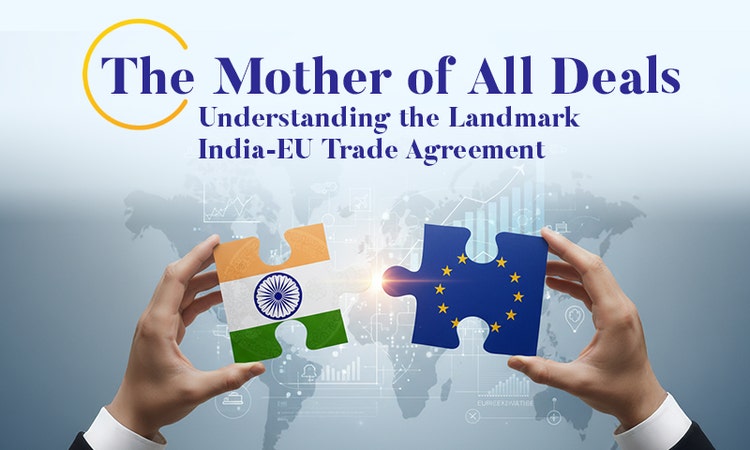
For nearly twenty years negotiators from India and the European Union (EU) sat across from each other in boardroom after boardroom. They argued over the price of cars, the safety of milk, the cost of wine and the rules for visas. For two decades it seemed like a deal would never happen.
That changed on Tuesday, January 27 2026.
Prime Minister Narendra Modi and European Commission President Ursula von der Leyen stood together in New Delhi to announce that the India-EU Free Trade Agreement (FTA) is finally a reality. This is not just a business contract; it is a historic shift that connects the world’s most populous country with the world’s largest trading bloc.
Why Now? The Stability Factor
You might wonder: If they couldn't agree for 20 years why now?
The world has become a less predictable place. Trade relations with the United States have become fickle (meaning they change often) and global supply chains have been disrupted by various conflicts. By signing this deal India and the EU have created a Zone of Trust. They have decided that even if the rest of the world becomes unpredictable they will have a stable open bridge between them. It is a way for both sides to hedge (protect) themselves against global economic chaos.
A Bird's Eye View: The Deal at a Glance
To understand the scale of this agreement look at the numbers below. This isn't just a small trade pact; it's a massive restructuring of how two giant economies interact.
Summary of the India-EU FTA
The Winners: What Gets Cheaper?
The biggest question for most people is: How does this affect my wallet? Here is a breakdown of how the prices of famous goods are expected to change over the next few years.
Expected Price Changes for Consumers
Jobs and Career: The Human Side of the Deal
This deal isn't just about shipping boxes of wine or cars, it’s about people. Two major sectors stand to win big in terms of jobs.
A. Textiles and Fashion (The Make in India Boost)
India is a giant in making clothes but for years it struggled to compete with countries like Bangladesh and Vietnam because those countries had duty-free access to Europe. India did not.
- The Change: From the day the deal starts Indian clothes shoes and leather goods enter Europe with 0% tax.
- The Result: Experts predict this could create 6.5 million new jobs in India and increase textile exports from $7 billion to over $30 billion.
B. The Mobility Pact (Visas and IT)
India’s brain power is its best export. One of the most unique parts of this deal is the Mobility Pact.
- The Change: It will now be much easier for Indian IT professionals engineers and researchers to get short-term work visas (up to 12 months) in Europe.
- For Students: If you study in Europe new rules will make it simpler to stay and gain work experience after you graduate.
What Stayed Protected? (The Safety Net)
Free Trade doesn't mean Unlimited Trade. Both sides have things they need to protect.
- Indian Dairy and Poultry: To protect the millions of small farmers in India the government kept milk, cheese and chicken out of the deal. You won't see cheap European milk hurting your local dairy farmer.
- European Standards: Europe has very high rules for food safety and the environment. Indian companies will have to upgrade their quality standards to sell in Europe. This is actually a win because it makes Indian products better for everyone.
- The Carbon Tax: Europe is introducing a tax on dirty manufacturing (like steel and chemicals). India and the EU have agreed to work together so that Indian green energy projects get support helping Indian companies meet these new rules.
How the Deal Compares to Others
India has signed many deals recently but this one is the heavyweight champion.
India's Trade Deal Comparison
The Timeline: When Can I Buy that Car?
The deal was announced in January 2026, but it takes time to turn words into action.
- Legal Scrubbing (Now): Lawyers are checking 1000+ pages of text to ensure there are no mistakes.
- Signing (Mid-2026): Both governments will officially sign the paper.
- Ratification (Late 2026): The Parliaments must vote Yes.
- Action (Early 2027): This is when you will see the taxes start to drop at the shops and ports.
Download our app on the Play Store and App Store
Conclusion: A New Global Blueprint
Prime Minister Modi called this a blueprint for shared prosperity. In a world where many countries are closing their doors India and Europe have decided to open theirs wider. This deal gives India the technology it needs to grow and gives Europe a massive market of 1.4 billion people.
It took 20 years to get here, but it looks like the wait was worth it.
Related read: India-UK FTA: A turning point in Global trade
Open Demat Account and Begin Your Investment Journey!