NSE International Exchange: India’s Gateway to Global Investing
Introduction
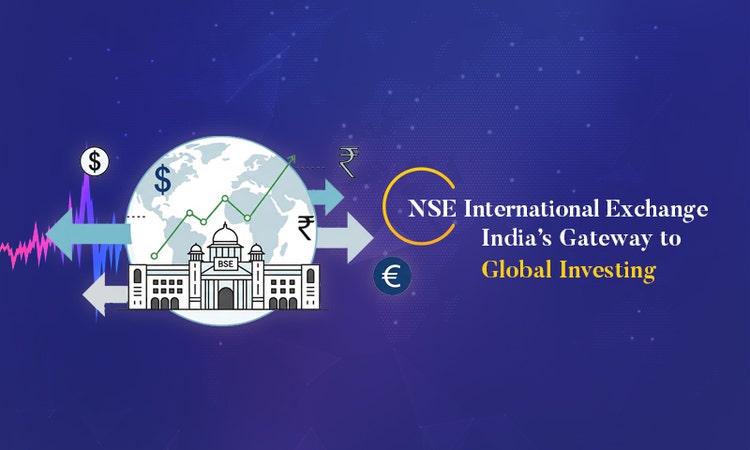
The NSE International Exchange (NSE IX) is a special stock exchange located in India’s first International Financial Services Centre (IFSC) at GIFT City, Gujarat. It acts as a bridge for Indian investors to buy stocks in global giants like Apple, Microsoft, and Amazon directly from India. Unlike the regular National Stock Exchange (NSE), which uses Indian Rupees, the NSE IX operates in US Dollars and follows international rules. It simplifies global investing by allowing fractional ownership, meaning you can buy a small piece of a high-priced stock for just a few dollars.
What is NSE International Exchange (NSE IX)?
NSE IX is a subsidiary of the National Stock Exchange of India. It was established to provide a platform where international products can be traded within India but under a different regulatory environment.
- Location: GIFT City, Gandhinagar, Gujarat.
- Currency: All trading and settlements happen in US Dollars (USD).
- Regulator: It is governed by the International Financial Services Centres Authority (IFSCA), rather than just SEBI, to align with global financial standards.
How it Differs from the Regular NSE
The Global Access Platform
The most exciting feature for retail investors is the Global Access platform. Previously, buying US stocks from India involved high fees, complex wire transfers, and multiple overseas brokers. NSE IX has simplified this into a digital process.
1. Fractional Investing
Some US stocks cost thousands of dollars for just one share. Through NSE IX, you can buy fractional shares. For example, if a stock is priced at $3,000, you can choose to invest as little as $10 or $50. This is done through NSE IFSC Receipts, which represent a fraction of the actual share held by a custodian.
2. Liberalised Remittance Scheme (LRS)
Indian residents can invest in NSE IX using the RBI’s LRS route.
- Limit: Every individual can send up to $250,000 per financial year abroad for investments.
- Process: Your Indian bank converts your Rupees into Dollars and sends them to your GIFT City trading account.
3. Dividend and Corporate Actions
Even though you are buying receipts or fractions, you are still entitled to the benefits of a shareholder. If the US company pays a dividend, the proportional amount is credited to your account in Dollars.
Benefits for the Indian Investor
Investing through a regulated domestic gateway like GIFT City offers several advantages over using random foreign apps:
- Lower Costs: By removing multiple middlemen, the cost of trading is often lower than traditional overseas brokerage accounts.
- No Tax in GIFT City: There is no Securities Transaction Tax (STT) or Stamp Duty on transactions within the IFSC.
- Single Platform: You can manage your Indian and global portfolios with much more ease, often using the same trusted broker ecosystem you already use for the NSE.
- Legal Protection: Since the exchange is based in India (IFSC), you have better access to grievance redressal and regulatory protection under Indian authorities (IFSCA).
Step-by-Step: How to Start Global Investing
If you are a resident Indian, the process is now almost entirely digital.
- Open an IFSC Trading Account: Contact your existing broker to see if they have a subsidiary in GIFT City.
- Complete KYC: This usually involves a quick video-based verification using your PAN and Aadhaar.
- Fund Your Account: Use your bank’s net banking to remit money under the LRS category. The money will show up in your account as USD.
- Select Global Stocks: Browse through the list of available US companies and ETFs.
- Place an Order: You can enter the number of shares or the dollar amount you wish to spend.
The Future: Expansion Beyond US Stocks
While the platform started with US equities, the roadmap for NSE IX is much larger.
- European and Asian Markets: Plans are in place to allow trading in stocks from the UK, Japan, and Germany.
- GIFT Nifty: The famous SGX Nifty (which used to trade in Singapore) has now moved to GIFT City as GIFT Nifty. This allows global investors to trade Indian index futures for 21 hours a day.
- International Bonds: The exchange also lists green bonds and sustainability bonds from various global issuers.
Risks and Considerations
No investment is without risk, especially when dealing with foreign markets.
- Currency Risk: Even if your stock goes up by 5%, if the US Dollar gets weaker against the Rupee by 5%, your total return in INR will be zero.
- Market Hours: US markets open late in the evening for India (around 7:00 PM or 8:00 PM IST). You may need to monitor your portfolio during these hours.
- U.S. Tax Laws: While India has a tax treaty with the US, you may still be subject to US withholding tax on dividends (usually 25%).
Comparison of Investment Routes
Conclusion
The NSE International Exchange is a game-changer for the Indian retail investor. It moves us from being just domestic savers to global investors. By removing the high barriers to entry and providing a safe, USD-denominated environment, NSE IX makes it possible for anyone to own a piece of the world's most innovative companies. As GIFT City grows, this exchange will likely become the primary gateway for all cross-border wealth movement in India.
Open Demat Account and Begin Your Investment Journey!