Cash Trading Definition, Rules, vs. Margin Trading
Introduction
You've decided to enter the stock market, and your first choice is how to fund your trade. Is it better to use your own money or to borrow from your broker? If you understand what cash trading and margin trading are, you will avoid losing a lot of money and trade more confidently. Here is an explanation in simple terms for you.
What is Cash Trading?
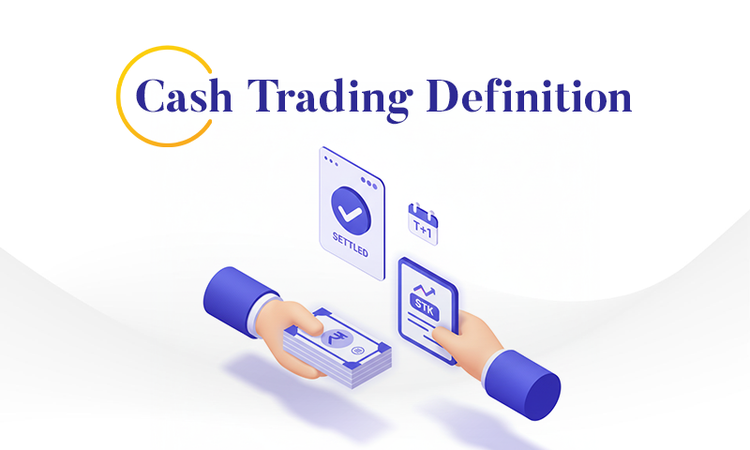
Cash trading is when you are only buying or selling stocks using only the money that is already in your demat account. No loans or borrowing, just you. When you take an order to buy, it will block the amount immediately, and it is credited to your account on T+1 (one business day after trade execution). The same works for when you sell; the cash will be in your account the next business day.
Imagine it like paying cash at a store: you can only spend what’s in your wallet. It is simple and also very straightforward.
For example, you have 50,000 in your account, and you choose to purchase 100 shares of a firm at ₹500/share. You have used the whole 50,000--100% will be used for the purchase, and that is fine. No buying on margin, and you're not in debt.
Get instant access to markets—Open a Demat account
Key Trading Rules to Understand
The Securities and Exchange Board of India (SEBI) and stock exchanges have strict rules to protect you:
1. Full payment up front: You must have 100% of the purchase price in your account before a purchase.
2. T+1 settlement: Scheduling the transfer of shares and/or money will only occur one business day.
3. Short selling: For delivery is not allowed in the cash segment. However, you can short-sell stocks intraday, provided you square off your position by the end of the trading day.
4. The account is credited with sale proceeds on T+1. Some brokers will allow you to utilise sale proceeds in a new trade right away, using early pay-in, but this is at the discretion of your broker.
Should you breach settlement rules, for instance, fail to deliver shares promptly, you may incur auction penalties imposed by the stock exchange. Repeated settlement failures may also place your broker in the position of having to temporarily restrict your trading.
What is Margin Trading?
Margin trading lets you borrow money from your broker to buy more shares than your cash allows. This is called leverage. For margin trading, brokers may offer leverage in accordance with the peak margin norms introduced by SEBI and approved stocks. Leverage varies depending on the stock and broker, but it generally can range around 3-4 times on funds in your account after meeting your broker’s margin requirements.
But borrowing isn’t free. You pay a margin trading interest rate, typically 12–18% per year, charged daily on the borrowed amount.
Margin trading example:
You have ₹50,000. Your leverage is 4:1 when you buy shares worth ₹2 lakh.
- So, you pay: ₹50,000 (your own),
- The broker: ₹1.5 lakh.
- If the stock moves up 10%, now you have a profit of ₹20,000 (a 40% return on your ₹50,000).
- If it goes down 10%, you lose ₹20,000, which wipes out 40% of your capital. If your losses test your cash balance, you owe the broker money.
Cash Trading vs. Margin Trading: A Simple Comparison
Why Choose Cash Trading?
As a beginner or conservative investor, cash trading is your safest path. You avoid debt, interest charges, and margin calls (when the broker demands more funds if your positions lose value). It promotes discipline; you only trade what you can afford.
Many successful Indian investors build wealth through patient, cash-based buying of quality stocks. No overnight stress, no forced selling.
When Does Margin Trading Make Sense?
If you have experience, appreciate volatility, and can check your positions every day, margin trading can magnify your returns in a bullish market. But remember: the higher the reward, the sharper the fall.
SEBI mandates margin reporting and mark-to-market losses. If your account value drops below the required margin, you get a margin call. Fail to top up? Your broker sells your shares, often at the worst time.
Cash Trading and Margin Trading: Your Decision Framework
Ask yourself:
- Do I want peace of mind or higher returns with higher risk?
- Can I afford to lose more than I invest?
- Am I trading for days or years?
For most Indian retail investors, cash trading is in line with their long-term objectives, i.e., investing in India's progress without the pressure of borrowing.
Final Thoughts
In either case of cash trading or margin trading, to be successful, you need to be knowledgeable. Start with cash trading to get yourself into good habits. Remember, you can always open an account and use Motilal Oswal's intuitive platform to check your funds, avoid violations, and grow gradually. The market rewards patience, not panic.
Explore more: What is MTF? - Complete guide for 2025 | Difference between Margin trading and leverage