Open Demat Account
Please enter your mobile number
Please enter your name

By proceeding you’re agreeing to our

T&C

Share Market Today

Stay ahead in the share market today with Motilal Oswal’s live updates on NSE & BSE, Sensex and Nifty trends, and real-time stock prices. Track top gainers, top losers, FII/DII activity, IPO news, and share market live insights all in one place. Whether you are a new investor or an experienced trader, our share market live page helps you stay informed about the latest stock market movements and global cues. With expert analysis, instant updates, and comprehensive coverage, you get everything you need to make smarter investment decisions.

COPPER
31 Jul 2026
1268.45
-3.80 (-0.30%)
CRUDEOIL
20 Jul 2026
6467.00
-58.00 (-0.89%)
GOLD
05 Aug 2026
143884.00
-546.00 (-0.38%)
SILVER
04 Sept 2026
230822.00
+438.00 (+0.19%)
USDINR
29 Jul 2026
95.14
-0.26 (-0.27%)
GBPINR
29 Jul 2026
126.61
+0.09 (+0.07%)

Today’s Hot Stocks

Trading Opportunities For You!

What is the Share Market?

Investors buy and promote stocks of publicly traded companies on the percentage market, additionally known as the stock market. While you buy shares, you become a shareholder and have a declaration to the company's property and profits. A share is a representation of partial ownership in a business. Investors may also make the most of capital appreciation if the business expands and performs properly, increasing the value of its stocks. Additionally, some organisations give their shareholders monthly earnings by distributing a percentage of their revenues as dividends. The proportion market is essential to India's economic growth. It serves as a link between traders trying to increase their wealth and groups in need of investment. In order to reduce debt, invest in a new era, or expand operations, corporations enhance cash from most people, giving investors a risk to share in the enterprise's boom. This manner promotes the development of capital, the advent of jobs, and general financial advancement.

The Indian share market has modified dramatically over time due to SEBI's strict regulatory manipulation, which guarantees investor safety and transparency. Investing has become much less complicated with the arrival of internet trading systems. Traders can open bills online, access expert studies, display markets in real time, and invest in a selection of asset classes with digital structures like Motilal Oswal. As a result, each newbie and seasoned investor can now invest in the share marketplace greater easily, effortlessly, and efficiently.

Types of Share Market

The share market is broadly divided into two main types based on the stage at which securities are traded:

1. Primary Market

groups raise new cash on the number one market by using the first offering traders new stocks. Usually, a rights trouble, follow-on public offering (FPO), or initial public offering (IPO) is used to accomplish this. Traders buy shares without delay from the issuing employer in this market, and the money raised goes directly to the employer. Businesses utilize the cash they raise in the number one market for a diffusion of factors, like expanding their operations, introducing new merchandise, breaking into untapped markets, paying returned loans, or satisfying operational needs. The book-building method is used to either offer stocks at a fixed fee or via a charge band. Shares are listed on stock exchanges, consisting as the NSE or BSE, when the issue closes, and shares are allotted.

traders have the danger of putting money into a company early in its public offering via the number one market. However, investors should cautiously consider the corporation's marketing strategy, growth potential, and basics earlier than making an investment because market forces have not yet examined share costs.

2. Secondary Market

buyers alternate stocks that have formerly been issued and listed on the secondary market. That is the market that most people think of after they think about the inventory marketplace. Those transactions are made viable in a controlled, open, and secure manner by using stock exchanges, just like the National Stock Exchange (NSE) and the Bombay Stock Exchange (BSE). Throughout market hours, investors can buy and sell stocks on the secondary marketplace, giving the machine vital liquidity. Here, delivery and call for enterprise performance, enterprise trends, the state of the financial system, and general marketplace temper all affect proportion expenses, which aren't constant. This technique of price discovery aids in reflecting a business enterprise's cutting-edge worth.

traders can check in losses, recognise profits, or rearrange their portfolios according to their threat tolerance and financial goals via the secondary market. Further facilitating easy entry to secondary marketplace buying and selling, platforms, along with Motilal Oswal, provide equipment and research insights that assist investors in effectively managing risk and making well-informed choices.

FII/DII Statistics (Amount in Crores)

July 2026
MTWTF Weekly Agg.
1-1.1k23Week 1-1.1k
678910Week 2-
1314151617Week 3-
2021222324Week 4-
2728293031Week 5-

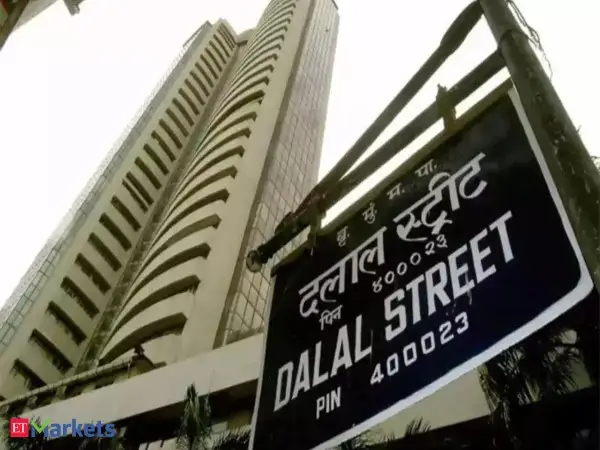
 What are NSE and BSE in the Share Market?

India has two major stock exchanges that enable share trading:

Parameter

NSE (National Stock Exchange)

BSE (Bombay Stock Exchange)

Year Established

1992

1875

Benchmark Index

Nifty 50

Sensex

Trading System

Fully electronic

Fully electronic

Number of Listed Companies

1,600+

5,000+

Market Capitalisation

One of the largest globally

The oldest stock exchange in Asia

Trading Frequency

High liquidity

High liquidity

Both NSE and BSE offer a safe, regulated, and transparent environment for trading shares in India.

 What are the Benefits of Investing in the Share Market?

Investing in the share market offers multiple advantages for long-term wealth creation:

  • Wealth Creation

There is a lot of capacity for long-term wealth growth in the proportion market. Compared to extra traditional investing alternatives like savings accounts or constant deposits, shares have traditionally produced higher returns over time, specifically when held for an extended period of time.

  • Ownership in Companies

Investing in shares gives you a stake in the enterprise. This allows you to take part in the corporation's development, fulfillment, and cost creation because it grows and operates correctly.

  • Dividend Income

Dividends are a common way for companies to offer their shareholders a chunk of their profits. Further to the capital boom, this offers traders a steady supply.

  • Liquidity

stocks may be fast offered or offered on stock exchanges for the duration of market hours, considering that they are surprisingly liquid investments. This permits investors to fast access their cash once they want it.

  • Inflation-Beating Returns

long-term profits from fairness investments may exceed inflation, supporting investors in maintaining and increasing their buying power.

  • Portfolio Diversification

By allowing investors to diversify their holdings throughout various industries, sectors, and corporations, the percentage market allows lower standard funding risk.

  • Transparency & Regulation

The Securities and Exchange Board of India (SEBI) oversees the Indian securities market, ensuring openness, equitable tactics, and the protection of investor interests.

With expert-backed platforms like Motilal Oswal, investors can make informed decisions using research-driven insights.

Assets Available on the Motilal Oswal Platform

Motilal Oswal offers a wide range of investment options under one platform, catering to beginners and seasoned investors alike:

  • Equity (Stocks)

Invest in shares of listed Indian companies across large-cap, mid-cap, and small-cap segments, enabling long-term wealth creation and participation in business growth.

  • Equity Derivatives

Trade in futures and options to hedge portfolio risk or take leveraged positions based on market movements, suitable for experienced investors.

  • Mutual Funds

Choose from equity, debt, hybrid, ELSS, and SIP-based funds to invest systematically or lump sum, managed by professional fund managers.

  • IPO Investments

Apply for upcoming Initial Public Offerings online and get an opportunity to invest in companies at an early stage of their public journey.

  • ETFs (Exchange Traded Funds)

Gain low-cost, diversified exposure to indices, sectors, or commodities, combining the benefits of mutual funds and stock trading.

  • Fixed Income Products

Invest in bonds, Non-Convertible Debentures (NCDs), and tax-saving instruments that offer relatively stable and predictable returns.

  • Commodities

Trade in commodities like gold, silver, and other metals to diversify your portfolio and hedge against inflation.

  • Currency Derivatives

Participate in forex markets by trading currency pairs, helping manage currency risk, or capitalising on exchange rate movements.

Motilal Oswal’s platform combines robust technology, in-depth research, and expert advisory to help investors achieve their financial goals.

Market Events

July 2026
SMTWTFS
1234
567891011
12131415161718
19202122232425
262728293031
Board Meetings (0)
Dividends (0)
Results (0)
IPO Close (0)

 Share Market Latest News

Indian shares surge following US-Iran peace talks and falling oil prices
Sensex and Nifty rose 0.2% as oil prices tumbled to $70/barrel amid US-Iran peace talks. Infosys shares led gains, gaining nearly 3%, while Bajaj Finance dropped over 1%. Nifty IT surged 3% and Nifty Realty and Metal gained 1% each. Broader markets a...
02 Jul 2026
news-banner
Nifty showed positive returns in 18 out of 25 years
Nifty could experience another positive month in July, backed by historical trends. Data from 2001-2025 shows 18 out of 25 Julys delivered positive returns, averaging 2.19% growth. Factors supporting July's strength include a normal monsoon, improvin...
01 Jul 2026
news-banner
43 stocks quietly doubled or more in value as Nifty stagnated
The Nifty 50 delivered little to no return over a two-year period due to global tariff concerns and geopolitical tensions. However, 43 stocks doubled investors' wealth, with Cupid leading the list with a 933% surge. Sigma Advanced Systems and Acutaas...
01 Jul 2026
news-banner
Sensex, Nifty steady with Titan and M&M leading
The Indian equity markets opened higher on July 1, 2026, with Nifty 50 rising 0.20% to 23,913.55 and BSE Sensex surging 0.22% to 76,647.80, following a higher trend in Asian peers. Global markets traded mixed ahead of the opening, with US futures on ...
01 Jul 2026
news-banner
Sensex suffers worst H1 decline since the pandemic era
Sensex declined 10.3% and Nifty 8.7% in the first half of 2026, their worst H1 performance since 2020. Small- and mid-cap indices outperformed large-cap peers, gaining 6.5% and 2.2% respectively. Foreign portfolio investors withdrew Rs 2.74 trillion,...
30 Jun 2026
news-banner

 FAQs on Share Market

What is share market?

Through stock exchanges like the NSE and BSE, stocks of publicly traded corporations are bought and sold on the share market.

What are shares or stocks?

Ownership in a firm is represented by shares or stocks. Proudly owning shares entitles you to a share of the company's equity.

How does the inventory marketplace operate?

Stocks are indexed by corporations on stock exchanges, and investors use agents to change these shares. Demand, delivery, business overall performance, and financial variables all affect expenses.

What makes investing in the stock market a good concept?

Long-term capital creation, expanded go back ability, dividend earnings, and inflation protection are all provided by the share market.

How can one make stock market investments?

You want a financial institution account, a trading account, and a Demat account so that you can invest. You may create an online account and begin making digital investments with Motilal Oswal.

When share market open?

Monday through Friday, the Indian stock market opens at 9:15 AM (market holidays excluded).

What time does share market close?

Monday through Friday, the stock marketplace closes at 3:30 PM.

On the stock marketplace, what units are traded?

Common trading instruments include bonds, mutual funds, ETFs, stocks, and derivatives (futures and options).

What types of accounts are required for stock trading?

You require:

  • Demat account
  • Account for trading
  • Connected bank account

What are the stocks investment charges on Motilal Oswal?

Depending on the trading place and plan decided on, Motilal Oswal gives aggressive brokerage plans.

Are there any account opening charges on Motilal Oswal?

No — Motilal Oswal generally offers free account opening.
This means there are no upfront charges to start your Demat and Trading account with them.

What paperwork is needed to begin a Motilal Oswal Demat account?

To open a Motilal Oswal Demat account, you need:

  • PAN card (mandatory)
  • Aadhaar card (for identity & address proof)
  • Bank proof (cancelled cheque or bank statement)
  • Passport-size photograph

Income proof is required only if you want to trade in F&O or use margin facilities.

Are there any tax implications on stock market investments?

Certainly. The cutting-edge earnings tax regulations in India apply to both short-term and long-term capital profits.

What are some suitable stock market investments for beginners?

To decrease threat and increase long-term wealth, novices can begin with massive-cap equities, mutual funds, SIPs, ETFs, and ELSS price range.