Mutual Fund Style Drift: How Large-Cap Funds quietly become Mid-Cap Funds
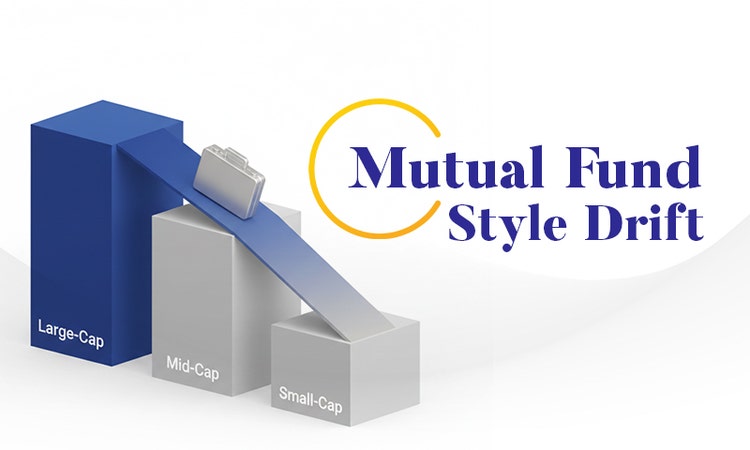
Imagine you buy a box of Mild salsa because you don't like too much spice. But when you get home and taste it, your mouth is on fire. The label said one thing, but the ingredients said another.
In the investing world, this is called Style Drift. It happens when a fund manager, in a quest to deliver higher returns, starts buying stocksthat are outside the fund's official category. The most common version in India is a Large-Cap Fund (supposed to be stable and mild) starting to act like a Mid-Cap Fund (spicy and volatile).
While higher returns sound great, style drift can derail your financial plan by exposing you to risks you never agreed to. Let’s dive into how this happens and how you can spot it in 2026.
Open Demat account and Unlock smarter investing today!
How Style Drift Happens: The Two Main Causes
Fund managers usually don't drift by accident; it’s often a choice or a result of market success.
- Performance Chasing (Active Drift): Large-cap stocks (the Top 100) are stable but sometimes move slowly. If a manager sees Mid-caps (ranks 101–250) skyrocketing, they might use the flexible portion of their fund to buy those stocks to boost their ranking on your app.
- The Success Problem (Passive Drift): Imagine a Small-cap fund buys a tiny company. That company becomes a massive success and grows into a Mid-cap. If the manager doesn't sell it, the fund has drifted into the Mid-cap space simply because its stocks grew up.
The SEBI Guardrail: The 80% Rule
To protect you, SEBI (the market regulator) has strict rules about how much a fund can drift. In 2026, these rules are tighter than ever.
The Danger Zone: Even though 80% is fixed, that 20% free space is where the spice is added. If a Large-cap manager puts that full 20% into aggressive Mid-caps, your safe fund could suddenly drop much faster than the Nifty 50 during a market crash.
Why Style Drift Matters to You
- Risk Overlap: If you already own a Mid-cap fund and your Large-cap fund drifts into Mid-caps, you are now double-exposed to the same risks.
- False Security: You might think you are 50% Safe and 50% Aggressive, but due to drift, you might actually be 30% Safe and 70% Aggressive.
- Strategy Breakdown: You chose Motilal Oswal's Buy Right philosophy for a specific reason. If a fund drifts, it might no longer follow the QGLP (Quality, Growth, Longevity, Price) criteria you signed up for.
How to Spot Style Drift (3 Simple Checks)
You don't need to be a math genius to find drift. Just look for these signs on your MO Riise app or fund factsheet:
- Market Cap Breakout: Look at the Portfolio section. If a Large-Cap fund shows more than 15-20% in Mid/Small caps, it is drifting.
- Benchmark Mismatch: If your Large-cap fund is suddenly beating the Nifty 50 by a huge margin while other Large-cap funds are flat, it might be taking hidden risks in smaller stocks.
- The Risk-o-Meter: If a fund’s risk level moves from Moderate to Very High, check the holdings immediately.
Conclusion: Labels Matter
Consistency is often more important than a one-time star performance. A fund manager who stays true-to-label allows you to sleep better because you know exactly what’s in your box.
In 2026, don't just chase the highest percentage; look for the fund that stays in its lane. At Motilal Oswal, we emphasize discipline because we know that a portfolio built on a steady foundation is the one that actually reaches the finish line.
Explore more: Best Mutual funds for first time investors in India | What are Large-cap mutual funds?