Exchange-Traded Product (ETP) vs. Exchange-Traded Fund (ETF): Key difference
Introduction
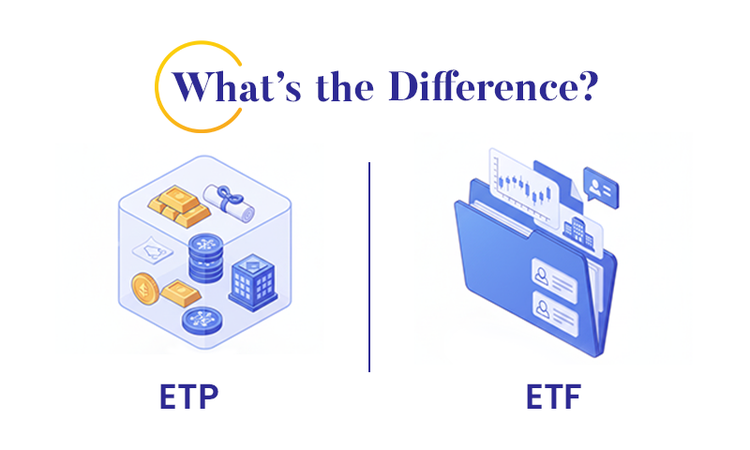
You may have heard the terms ETP and ETF debated in investment discussions, but do you understand how they differ? As an investor operating in the fast-moving markets on NSE and BSE, knowing the differences between the two can improve one’s portfolio strategy. Let’s break down the exchange-traded product definition and see why an exchange-traded fund (ETF) is just one slice of the broader ETP exchange-traded product universe.
What Is an Exchange-Traded Product (ETP)?
Picture yourself buying a single stock on your trading app. Now imagine that one ticker gives you exposure to hundreds of assets, stocks, bonds, gold, or even currencies, all bundled neatly and traded intraday. That’s the magic of an ETP exchange. An exchange-traded product refers to any pooled investment vehicle that is listed on a stock exchange and operates like a share with a real-time price. Unlike mutual funds that only redeem at the close of the business day at NAV, you can enter or exit positions any time while the market is open.
Open Demat account - Begin your investment journey now!
Key Features of ETPs
- Trade on the ETP exchange in real time.
- Liquidity intraday at live bid-ask quotes.
- Access a wide array of diverse assets with a single ticker.
Exchange-Traded Fund (ETF): The Most Common ETP
An ETF is probably best thought of as a very transparent basket that follows a benchmark (e.g., Nifty 50, Sensex, etc.). When you purchase one unit of the ETF, you will own a proportionate share of ownership of every stock in the index and the transport properties daily, exactly the way the market dictates. The fund house owns those securities physically, and the overall value of the fund is professionally managed through a distinct creation-redemption process to ensure that the ETF remains glued to its real underlying value.
How ETFs Remain Close to NAV
This process includes authorised participants exchanging baskets of shares for ETF units to keep the premium or discount to NAV as small as possible. You get the best of both worlds, with tight tracking, high liquidity, and sometimes even lakhs of units trading daily on the Indian exchange.
Beyond ETFs: ETNs and ETCs
But not every ETP exchange-traded product works this way. Beyond ETFs lie instruments like Exchange-Traded Notes (ETNs) and Exchange-Traded Commodities (ETCs).
Exchange-Traded Notes (ETNs)
An ETN is a promise from a bank to pay you the return of an index, minus fees, at maturity. You don’t own the underlying assets; instead, you hold the issuer’s unsecured debt. This introduces credit risk; if the bank falters, your investment could suffer, regardless of how the tracked index performs.
Exchange-Traded Commodities (ETCs)
ETCs let you tap commodity prices, gold, silver, or crude, without storing physical bars or barrels. Some ETCs hold actual metal in vaults; others use derivatives. Either way, they trade on the ETP exchange just like equities.
Why the Difference Matters to You
Liquidity and Trading Costs
Most ETFs on Indian exchanges experience significant trading volumes daily, resulting in very narrow bid-ask spreads (often less than a few paise). Investors can buy and sell large amounts without causing pricing issues. ETNs and ETCs may be less liquid due to their specialized nature, which can widen spreads and make it costlier to exit those investments during volatile periods.
Expense Ratios
In India, large-cap index ETFs typically feature very low expense ratios (often under 0.10% p.a.) while other specialised products, such as a commodity or international ETF, may often be the same 0.5% or more for all the extra complications associated with the specialised product. Always check the fund's specific expense ratio.
How taxes are treated in India
- Long-term capital gains (LTCG) above ₹1.25 lakh for equity-oriented ETFs (domestic) held for longer than 12 months and sold on or after July 23, 2024, will be taxed at 12.5%.
- For non-equity ETFs (for example, debt, commodity, or specified ETFs) purchased on or after 1 April 2023 (or held less than the prescribed period), many are taxed at your applicable income-tax slab rate, both for short- and long-term gains, and for some indexation benefits may no longer apply.
- Always consult your CA, as this is subject to change due to new rules/taxes from SEBI.
Simplicity of Diversification
You can diversify your capital across 50 blue-chip stocks or 500 mid-cap stocks, which reduces your risk of a single stock. Want to invest in gold but don’t want to keep a gold bar in a lockbox? A gold ETF can provide you with access to price increases in the gold market with no counterparty risk or storage. Craving global exposure? Currency or international ETFs let you ride dollar strength or emerging-market rallies, all rupee-denominated on Indian bourses.
Your 3-Point Checklist Before Investing
1. Liquidity: Watch how actively it’s traded, keep an eye on the average daily volume; it’s easier to buy/sell.
2. Tracking Error: Look at how well it tracks its benchmark; small gaps indicate it is acting as projected.
3. Issuer Credibility: Sebi mandates daily disclosure for ETFs; for ETNs, verify the bank’s credit rating
The Bottom Line
Treat the exchange-traded product as the umbrella and the exchange-traded fund as the reliable workhorse beneath it. ETFs suit core portfolio holdings, low cost, high liquidity, and broad exposure. Reserve ETNs and ETCs for tactical bets where you accept credit or commodity volatility for targeted returns.
Whether you’re building wealth for retirement or hedging inflation, these instruments let you trade like a pro, anytime the market bell rings.
Explore more: ETF: Meaning, Types, Pros and Cons | What are Exchange Traded Derivatives? | Stocks vs. ETFs: A guide to selecting the right investment