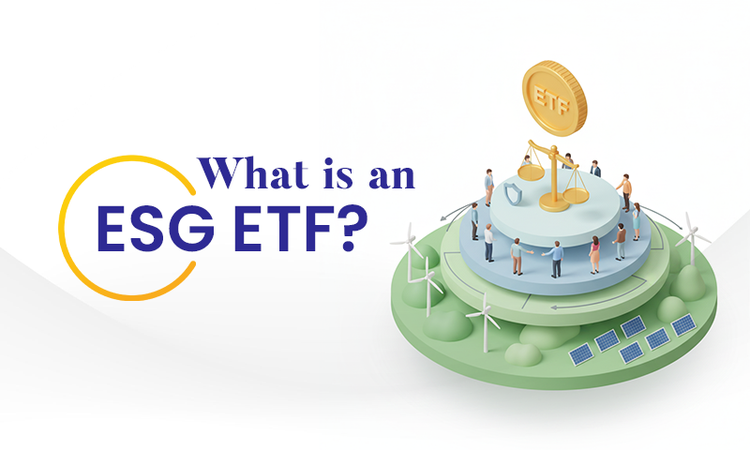
What is an ESG ETF? Environmental, Social, and Governance ETFs
Introduction
You may have noticed ESG from simply hearing about it to seeing mutual fund advertisements, but what does it mean for your money? If you are an investor located in India, an ESG ETF will allow you to create wealth while supporting a cleaner and more equitable future. Let's break down the meaning of ESG, define what an ESG ETF means, and review why an ESG ETF is a good fit for your demat account.
Three Things ESG Means
ESG = Environmental, Social, and Governance – or a scoreboard of responsible companies.
-
Environmental: Does the organisation measure and manage emissions, water usage, and waste recycling?
-
Social: Does it pay its employees fairly? Does it help elevate communities?
-
Governance: Is the leadership honest, and is there a diverse, independent governance structure?
High scorers aren’t just “nice”—they’re built to thrive long-term.
Get instant access to markets—Open a Demat account
What is an ESG ETF?
An ESG ETF, or environmental, social, and governance exchange-traded fund, is a type of exchange-traded fund that invests solely in companies meeting strong ESG standards. Think of it as a pre-packaged portfolio of India’s leading responsible businesses that meet a robust ESG filter and are verified for you into a tradeable unit. You can buy or sell small units of these ETFs on the NSE and BSE like any stock, during live market hours and will receive a real-time price. You don't have to wait for end-of-day NAV, as you do with mutual funds.
If you have ever tried to research individual “green” or “ethical” stocks, you can appreciate the amount of time it will take you to get one exposure to each of the individual selected "responsible" equities. One ESG ETF exposure gives you access to 30 to 100 of the leading equity sustainability performers across industries, whether they be IT companies that prioritise data privacy, renewable energy innovators, or consumer brands that drive and invest in a fair labour movement. An ESG ETF provides you with one chance to invest in various leaders of sustainability performance.
Similar to traditional indexing and indexing strategies, the higher the index rises, the higher the ETF will rise based on the successful business model of those socially responsible firms. In this manner, your ETF investment return, as applicable, is hinged on the return performance of India’s sustainability champions.
How It Works for You
Each day, the fund mirrors its index. Does a company fail governance? It's dropped. A solar star qualifies. It’s added. You stay hands-off while your money stays principled.
Low expense ratios (0.2%–0.5%) keep costs tiny, cheaper than active funds, so more returns reach you.
Different Types of ESG ETFs
Pick what fits:
- Broad ESG ETFs: Large/mid-cap investments across many sectors.
- Thematic ESG ETFs: Clean energy, water, or diversity investments.
- Sector ESG ETFs: Top-performing firms in the information technology sector, or banks, that show leadership in environmental, social, and governance.
Why Invest in ESG ETFs?
You want profit and purpose. And here is where you can achieve both:
1. Profit with Principles: Pay for solar farms and fair factories, and this will deliver a gain.
2. Policy Push: If India achieves its 2070 net-zero goal and SEBI regulation rewards ESG leadership, there is a gain.
3. Risk Shield: Who likes to be dinged by fines or protests? Choose not to invest in those firms and ensure a gain.
4. Instant Spread: Buy many stocks with one purchase.
Types of Risks
Now take note of the risks and balance to build your portfolio for gain:
-
Smaller Pool: ESG investing means excluding companies engaging in climate-wrecking pollution, which may lead to overweight tech stocks.
-
Rating Gaps: Different rating agencies can and do disagree on the score and rating for a given company in the same sector.
-
Short-Term Drops: "Dirty" sectors can suddenly perform well in a booming economy.
Match the ETF to your horizon
How to Invest Today
Four clicks to start:
1. Demat Ready: Link bank via SEBI-registered broker.
2. Screen Funds: Review the expense ratio, holdings, and tracking error.
3. Purchase Units: Search ticker, input the number of units to buy, and click market order.
4. SIP & Hold: Automate the monthly purchases to take advantage of rupee-cost averaging.
Locating the best ESG ETFs
Be smart in your hunt:
- AUM: ₹500 Cr+, to ensure your trades flow easily.
- Tracking Error: 0.5% or less.
- Volume: 50,000+ units daily.
- Index: Nifty/BSE ESG for transparency.
Returns: Myth vs Reality
Do ESG ETF funds lag? Often not. Over five years, India’s ESG indexes trail broad benchmarks by ~1%—sometimes leading in corrections. Why? Sustainable firms win capital, talent, and trust.
Your Move
An ESG ETF is a strategy, not a sacrifice. You build wealth while fuelling India’s green, inclusive shift—whether you’re 25 starting SIPs or 55 planning legacy.
Open your app, search for an ESG ETF that clicks with your values, and trade today. Your money can do well, and do good, right now.
Explore similar reads: Stocks vs ETFs: A guide to selecting the right investment | The best ETFs to invest in India in 2025 | Top ETFs to invest in India for a diversified exposure