Intraday in Stocks vs 24x7 Crypto Trading: Which Actually Works for Retail Investors?
Introduction
As a retail investor, you're probably weighing the pros and cons of intraday stock trading and crypto trading. Both are viable trading modalities, but they offer different styles, variance in risk, and distinctions as to which modality best suits your long-term financial goals. This article highlights some differences - burnout risk, market structure, tax implications, and ability to cultivate a strategy - to help you determine which trading modality fits your lifestyle and your ability to risk.
Burnout risk: How fast do you want to move?
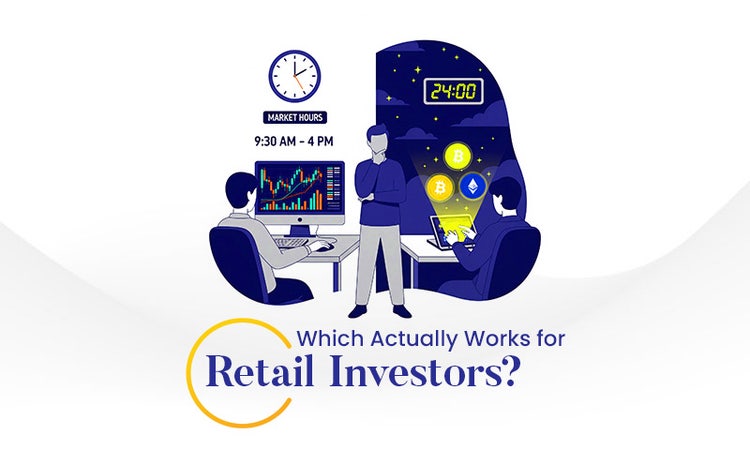
Intraday stock trading is governed by the schedule of the Indian stock markets (9:15 AM - 3:30 PM IST). When trading intraday stocks, you are doing so in a structured way, creating a routine. Your scheduled hours leave evening time for relaxation, trade review, or full-time commitments like post-market analysis for a good night's sleep. This structure can reduce mental fatigue by putting mental breaks into your routine. Trading stocks intraday does not preclude engaging in other professionally rewarding work, since the market and its closing define your mental breaks. When you're in a structured routine, you must be able to take mental breaks and no longer must worry about the constant price ticks commonly associated with trading, like crypto trading. After the market closes, intraday trading allows you to backtest trades using option chain analyses or price action patterns, but you don't have to engage after closing. This ensures you won't overload yourself with trade review.
Open Demat Account and Start Trading!
On the contrary, crypto trading is a 24/7 endeavour. You always face price movements, news from other global markets, or general volatility spikes. Bitcoin could drop by 20% at 2 AM IST. This often leads to FOMO and needing to be engaged with charts at weird hours. Suppose you do not draw lines and restrict your engagement with the markets. In that case, you can become burnt out, as was observed in many Indian traders who traded excessively during the 2021 crypto bull run and now seem emotionally burnt out by 2023.
Market Structure: Stability vs Chaos
Because SEBI regulates the Indian stock market and intraday stocks, you can expect stability while trading. The Indian stock market uses circuit breakers to halt trading in indices or stocks during extreme volatility, offering protection against panic-induced losses. You can expect most of the data you provide, like open interest (OI), volume, and earnings reports, to be accurate and to see if you can find patterns. For example, because you are trading Nifty 50 stocks, you can benefit from the predictability of catalysts, like RBI announcements or quarterly results.
Without intervention from regulators in India, crypto markets are very susceptible to wild volatility or market swings due to whale trading or general market sentiment. Low liquidity altcoins can quickly surge or pull back by 30-50% within a few hours or entice you into taking a five-gainer with a chase or liquidity trap. Cryptos like BTC/USDT are superior for liquidity but have their downside. The absence of circuit filters means a sudden price change cannot be stopped or filtered, and the volatility of high leverages (at times 50x) indicates the probability (risk) of getting stopped out. If you're risk-averse and need more stable price changes, stocks in the market are a better option.
Taxation: Simplicity versus Complexity
Taxation is a factor, too. When you look at intraday stocks, companies that operate on behalf of traders and investors in India have a clear tax framework. Intraday stock trading is classified as speculative business income, not capital gains. It is taxed as per your individual income tax slab (not a flat 20%). Since SEBI oversees all reports in the stock market, traders must remain honest and transparent in their reporting. Each broker reconciles to their own contract/contract notes that can be used for tax disclosures. Overall, this clear framework makes it easier for you to "comply", especially if you're a novice in trading.
Since 2022, crypto gains are taxed at 30% plus a 4% cess, and for transactions more than ₹50,000, they are taxed at a 1% TDS. You cannot set off your crypto losses against other income. The various regulatory hurdles of foreign exchanges, including navigating FEMA regulations and reporting foreign assets, add complexity. If you prefer to file taxes without complication, intraday stocks won't cause a headache.
Sustainable strategies: Building an edge for the long term
For intraday stocks, the Indian market's maturity will support sustainable strategies. You can apply basic technical analysis tools, such as moving averages, RSI / VWAP, etc. and set up repeatable trade setups. SEBI has limited leverage on intraday F&O (5x), which limits people from losing money easily, and helps instil discipline. You can also initiate BTST (buy today, sell tomorrow) trades and exploit momentum overnight, with little stress on your risk. You can further research your edge using historical data such as NSE's Bhavcopy and backtest.
What Works for You?
As a retail investor, the right way to invest will ultimately depend on your lifestyle, risk tolerance, and goals. You could also rely on options analytics or price action to give you a sustainable edge.
If you want to combine a few aspects, you could choose trading stocks for stability while selectively participating in crypto for opportunistic exposures to potentially high rewards. No matter your choice, make it easier to manage overall risk while staying firmly disciplined, ensure your strategy allows for a manageable lifestyle, and trade intelligently in ways that grow your capital.
Recommended Reads - Cryptocurrency vs Regular Currency | Invest in Crypto | CryptoCurrency Jargons | Cryptocurrency Taxes