Position Sizing: How Much Capital Should Be Put at Risk Per Trade
Introduction
The world of trading offers many different opportunities and paths to take. However, with so many choices, one question stands out for traders, how much capital should you risk on each trade? This all comes down to a portfolio management technique called position sizing that is an essential part of trading with discipline because it can protect your portfolio and allow for potential gains over time. Whether you are trading stocks, a derivative, or a commodity, knowing the position sizing definition will allow you to weigh risk versus reward through position sizing in trading. In this article, we explore the position sizing definition and why it is important, along with a position sizing formula that can help protect your investments.
Open Demat Account and Start Trading!
What is Position Sizing?
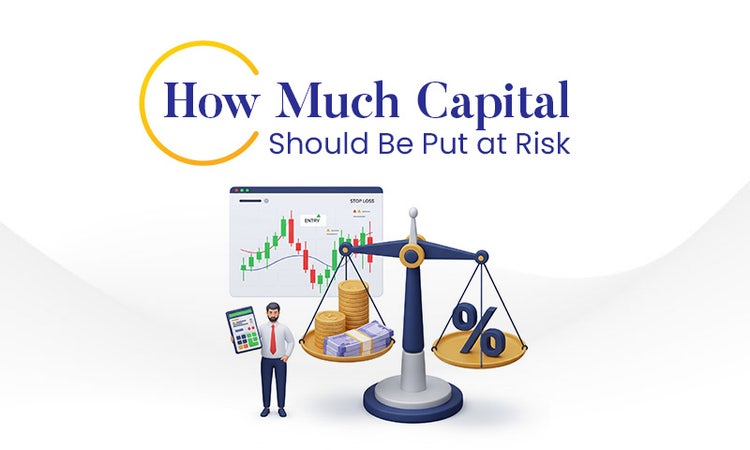
Position sizing is the process of determining the amount of capital that you are going to risk in a single trade depending on your level of risk tolerance, the size of your account, and the market condition. Position sizing is not about picking the right stock to trade or timing the market perfectly, it is about controlling how much you are willing to lose on a trade if things do not go your way.
Imagine your trading account is worth 5,00,000 (Five Lakh Indian Rupees). You see an opportunity and thinking you could make a big win, you put a sizeable portion of your account into one trade. You are hoping this trade will ultimately make you money and better your trading account. But what if the market moves against you? Position sizing creates the limit around a trader's risk per individual trade, so they don't put their whole account into one single trade!
Why is Position Sizing Important?
In the Indian stock markets, which can be very volatile, having a systematic way of position sizing can insulate you from losses that could result in complete capital wipeouts. Position sizing will make sure you don't take an unnecessary risk per trade and will allow you to maintain capital for other trades. In other words, by using position sizing, and limiting the extent of the risk you can decide to trade and not worry about a run of several losses taking you to close to the remnants of your portfolio.
Additionally, position sizing forces traders to think of risk before reward and keeps their trades aligned with their desire. It keeps novice traders in line as well as veteran traders who trade blue-chip firms having large positions in their accounts. Ultimately, position sizing will put you in a position to remove your emotions and give you the confidence to be ahead of the game when trading.
Popular Position Sizing Techniques
There are two position sizing strategies that you can use:
• Fixed percentage risk: Always risk a fixed percentage (for example, 1%) of your portfolio on each trade. By doing this, it automatically scales with your account size and is particularly useful for growing portfolios.
• Volatility-based sizing: In such scenario as above, you would take a larger position in a less volatile (low beta) stock and a smaller position in a high beta stock to account for risk. For example, you risk less in a stock with wide swings in price (e.g. a small-cap stock) and larger position size in a more stable market cap like a large-cap stock.
Pointers for Indian Traders
• Sector Diversification: The Indian market has a diverse list of sectors from IT, banking, Pharma, etc. You can spread your capital across sectors using position sizing and reduce exposure to sector concentration risks.
• Consider Commissions and Taxes: Both commission expenses and taxes (e.g. STT) factor into your overall profits, so take them into account when calculating your position sizing to ensure you are managing your risk accurately.
• Review Regularly: As the portfolio changes over time or market conditions evolve (e.g., during a bull run in the Sensex), you'll want to modify your position sizing strategy to remain on course and on target.
Conclusion
Learning how to use position sizing is in many ways like learning to drive defensively in a crowded marketplace such as India. Defensive driving is not about avoiding every pothole, rather, it is about knowing that you can keep driving after hitting one of them. A position sizing formula does the same for the trader: it allows you to protect your capital, manage risks, and start to build for long-term success. Begin small, apply strategies to a number of trades, and adjust your strategies where applicable as you grow. Position sizing is not just trading; position sizing is smart trading.