How to avoid Emotional Investing
Introduction
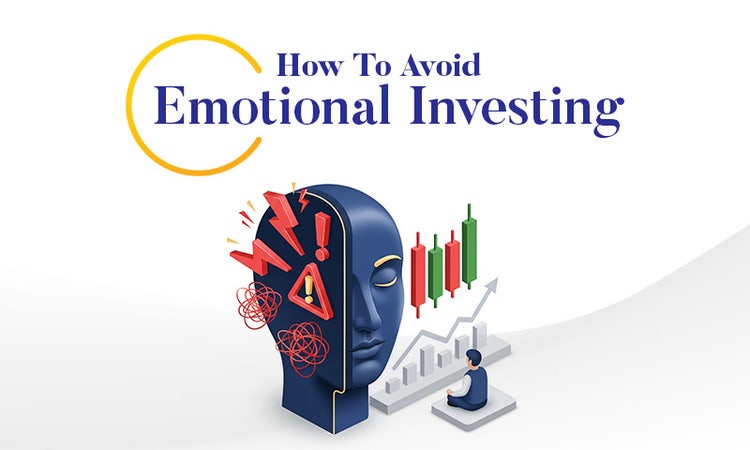
Emotional investing occurs when you allow emotions, rather than facts, to influence your investment decisions. Emotional investing is straightforward, as it refers to acting on impulsive behaviours such as fear of missing out (FOMO) or panic during a rapid drop in the market, which usually negatively impacts your portfolio. In Indian markets, where global cues, policy changes, or corporate earnings create volatility, these emotional responses can result in costly mistakes, like chasing after a glitzed-up IPO or selling mutual funds because of fundamentals during a market correction.
Now, let's dive into the psychology behind why you are investing with emotions. When we examine emotional investment psychology, we must consider that there are behavioural biases that influence how you invest. Loss aversion means you feel a Rs. 10,000 loss much more than a Rs. 10,000 gain feels good, which drives you to pre-emptively sell. Confirmation bias is when you seek out only the news stories that confirm your optimistic outlook about a stock, for example, a pharmaceutical giant, but you ignore the risks. Then we have herd mentality, when you rush into trending sectors, like green energy, simply because you see it trending on social media, you buy at inflated prices.
These biases are especially relevant in explaining why so many Indian investors buy into the markets at peaks and sell out at troughs.
Open Demat Account and Start Trading!
Emotional Investment in Real Life
During a bull run, greed may tempt you to put your life's savings into a madly soaring IT stock despite concerns about overstretched valuation. Then, when the market or sector dips, all your paper gains vanish into thin air. During a bear market, such as the 2020 crash, fear may terribly affect you as an investor, leading you to mercilessly liquidate your equity SIPs at a loss, missing a massive rally on the subsequent recovery. Or, after a few winning trades, overconfidence might push you to overinvest in a single stock, like an auto company, leaving you vulnerable when the sector slumps.
How Emotions Interact with Market Cycles
The emotional investment relationship between your personality and market cycles is key. If risk-averse, you may hold on to fixed deposits during a rally, allowing inflation to erode your wealth. If you are a risk taker, you might be drawn into a bull market and make risky derivatives positions like options in Nifty, but face losses when the bull sentiment evaporates. During a downturn, you may be the herd follower who purchases asset tips given by trading applications while buying some assets late, the perfectionist who delays all investments waiting for the "perfect" opportunity or missing out on many opportunities in investments like infrastructure.
Strategies to Avoid Emotional Investing
How do we avoid emotional investing? First, identify your type of investor. Are you risk-averse so you sell based on fear? Set up SIP (systematic investment plans) so your investments are automatic before emotion makes you freeze. Are you overly confident? Cap any stock you hold at 5% of your portfolio, and journal why you made your decision and why it was successful or unsuccessful. Review your journal quarterly and compare it to your situation to avoid extreme behaviours from overconfidence and/or emotional responses.
Your Plan for Personal Investment
Follow a simple plan for your discipline:
- Establish Goals: Are you saving for a flat in Bengaluru or for retirement in Goa? Write down the timelines and risks involved.
- Write a Policy: Write down your rules, such as "I will invest Rs. 10,000 a month via SIPs without any regard to market noise."
- Keep Anchored: Share the plan with your trusted investment advisor to avoid emotional detours.
- Mute Media Noise: High market volatility means it's time to avoid media headlines and focus solely on fundamentals, such as company debt-equity ratios.
Tools for Long-Term Success
Eventually, if all goes well, you will want to develop long-term strategies to control your emotions. Dollar-Cost Averaging comes into play. By investing via SIP, you will invest the same amount regularly without market pricing issues, meaning you will buy more units when prices are low and fewer/units when they are high, so your average cost would balance the highs and lows. All the data support that this strategy outperforms any emotional market-timing attempts. You can also diversify between equities, debt, and gold, while making up your total investment with a combination of large-caps, mid-caps and bonds to minimise any potential shocks outside the sector of one's investment. Automation or setting up transfers is another excellent option; this acts as an emotional firewall, offering consistency.
Conclusion
If you learn to avoid emotional investing, you will reap the benefits. By identifying biases, sticking to a plan, using tools like SIPs, and investing in a diversified way, you will be able to invest with clarity and conviction in equal parts, so your economic future remains on track.
Suggested Reads: Tame your Lizard Brain - Master emotional investing | How patience fuels long-term investing success | Why active investing can be tough?